Best Foam Rollers for Muscle Recovery in 2026
Best foam rollers 2026: Tested for density, texture & durability. TriggerPoint Grid, Amazon Basics & vibrating options compared. Find the right one.

Best Foam Rollers for Muscle Recovery in 2026
Whether you're a regular athlete or a desk worker with chronically tight hips, foam rolling is one of the cheaper and more effective tools for improving mobility and recovering faster. We've tested options across the main categories — smooth budget rollers, textured options for deeper work, and vibrating rollers — to find what actually works for different situations and body types.
Quick Answer
TriggerPoint Grid 1.0 is the pick for most people — multi-density surface hits muscle groups more effectively than smooth rollers, holds its shape after months of regular use, and is priced below most vibrating options. The Amazon Basics High Density roller is the right call if you're new to foam rolling and want to try it before committing more money.
Table of Contents
- How We Test Foam Rollers
- Quick Comparison Table
- Foam Rollers vs Massage Guns: What's the Difference?
- What to Look For in Foam Rollers
- Detailed Product Reviews
- Detailed Comparison Table
- Care Tips for Foam Rollers
- Common Mistakes When Buying Foam Rollers
- FAQ
- Final Verdict
How We Test Foam Rollers
We used each roller during actual training sessions and recovery periods, focusing on how the density and texture held up over repeated use, how effective the design was for different muscle groups, and whether the roller maintained its shape after weeks of regular use. We also tested portability for users who travel with their gear.
- Density and firmness - Compression resistance and shape retention over time
- Texture evaluation - Pressure distribution and effectiveness across different muscle groups
- Durability - Material quality and how well rollers withstand regular use
- Comfort and usability - Ease of positioning and overall experience during use
- Special features - Vibration settings, contoured designs, effectiveness in practice
- Portability - Weight and size for different use cases
- Value - Price relative to quality and real-world performance
Quick Comparison Table
| Name | Key Feature | Best For | Texture |
|---|---|---|---|
| TriggerPoint Grid | Multi-density | Most users | Textured |
| Amazon Basics | Budget value | Beginners | Smooth |
| TheraGun WaveDuo | Vibration | Enhanced recovery | Wave texture |
| Original Body Roller | Deep tissue | Advanced users | Triple zones |
Foam Rollers vs Massage Guns: What's the Difference?
Foam rollers apply pressure through your own body weight — you control the intensity by shifting how much weight you load onto the roller. This makes them well-suited for broad muscle groups and full-body maintenance work. Massage guns deliver focused percussion to a specific point, which can be more effective for isolated knots or areas that are hard to target with a roller. For most people, a foam roller handles daily recovery well. A massage gun is more of an upgrade than a replacement.
What to Look For in Foam Rollers
Here's what to consider when choosing a foam roller:
| Feature | What It Means | Best For |
|---|---|---|
| Density | Firmness level (soft, medium, firm) | Beginners (soft), Advanced (firm) |
| Texture | Smooth vs textured (ridges, bumps) | Beginners (smooth), Deep tissue (textured) |
| Length | 12", 18", 24", 36" options | Travel (12-18"), Full body (24-36") |
| Material | EVA foam, polypropylene, EPP foam | Durability, firmness |
| Special Features | Vibration, hollow core, contoured design | Enhanced recovery, targeted areas |
| Portability | Weight and size for travel | Home use vs travel |
Rule of thumb: Start with a smooth, medium-density roller if you're new to foam rolling. Textured rollers provide deeper pressure but can be too intense for beginners. Longer rollers (24-36") are better for full-body work, while shorter ones (12-18") are more portable. Vibrating rollers add percussion but cost more.
Detailed Product Reviews
1. TriggerPoint Grid 1.0 Foam Roller - Best Overall

The TriggerPoint Grid has been a standard in physical therapy for years, and for good reason. The hollow core maintains shape after heavy use — it won't flatten out like cheap foam rollers do. The multi-density surface is broken into three zones that vary in firmness, which allows you to apply different pressure levels without changing position. At 13 inches it's compact enough to pack for travel. The price is higher than basic rollers, but for a daily-use tool it holds up long enough to justify the cost.
Pros:
- Patented multi-density foam surface for firm, targeted compression
- Distrodensity surface pattern distributes pressure effectively across different muscle groups
- Hollow core design retains shape after repeated use
- Durable EVA foam — easy to wipe clean
- Compact 13" size — fits in a carry-on or gym bag
- Lightweight at 1.32 lbs
Cons:
- More expensive than basic foam rollers
- Firm texture can be uncomfortable for beginners who haven't built up tolerance
- 13" length means you need a longer roller for full-body sweeps
TRIGGERPOINT Performance Therapy Grid Foam Roller for Exercise, Deep Tissue Massage and Muscle Recovery, Original (13-Inch), Midnight
Check price on Amazon →
👉 View product details
(#ad)2. Amazon Basics High Density Foam Roller - Best Budget
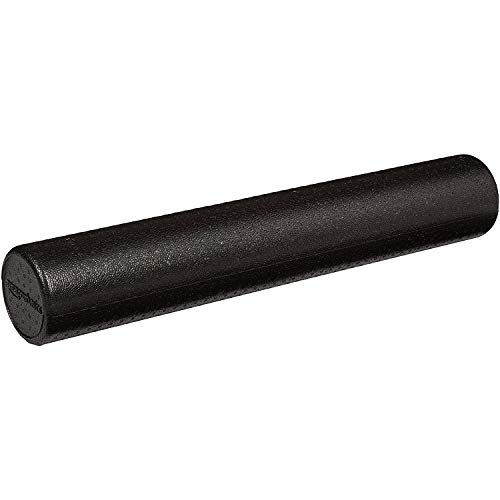
This roller does what it says. High-density polypropylene, smooth surface, multiple length options, wipes clean easily. It's not going to last as long as the TriggerPoint under daily heavy use, but for someone starting out or using it a few times a week, it works fine. The smooth surface is also better for beginners who find textured rollers too intense on tight muscles. The 36" version is solid for full-back work.
Pros:
- Very affordable — best cost-to-function ratio here
- Available in 12", 18", 24", and 36" lengths
- High-density polypropylene maintains firmness
- Molded edges for added comfort
- Lightweight and easy to move around
- Wipes clean easily
Cons:
- May compress and lose firmness faster than premium options under daily use
- Smooth surface only — no texture for deeper pressure
- No special features
Amazon Basics High-Density Foam Roller for Exercise, Stretching and Muscle Recovery, 36 Inches, Black
Check price on Amazon →
👉 View product details
(#ad)3. TheraGun WaveDuo - Best Vibrating Option

The WaveDuo is shaped specifically for the back and neck — the curved profile positions the spine in a channel while the two lobes apply pressure on either side. Five vibration settings adjust via the Therabody app, which adds precision if you want different intensity for different areas. The 200-minute battery life is genuinely long. This is a legitimate upgrade over standard rollers for back tension, though the specific shape limits what you can do with it on legs or other areas.
Pros:
- 5 vibration intensity settings, adjustable via Therabody App
- Contoured design fits the back, spine, and neck well
- Bluetooth app control for customizing settings
- 200-minute battery life
- Wave texture with silicone grooves
- Compact enough for travel
Cons:
- Significantly more expensive than standard rollers
- The internal battery adds noticeable weight
- App required for full feature customization
- The contoured design is mostly useful for back and neck — less versatile on other muscle groups
TheraGun Therabody WaveDuo - Ergonomically Contoured Foam Roller - Bluetooth Enabled Muscle Roller for Your Back, Neck & Spine with 5 Customizable Vibration Frequencies in Therabody App
Check price on Amazon →
👉 View product details
(#ad)4. The Original Body Roller - Best Deep Tissue
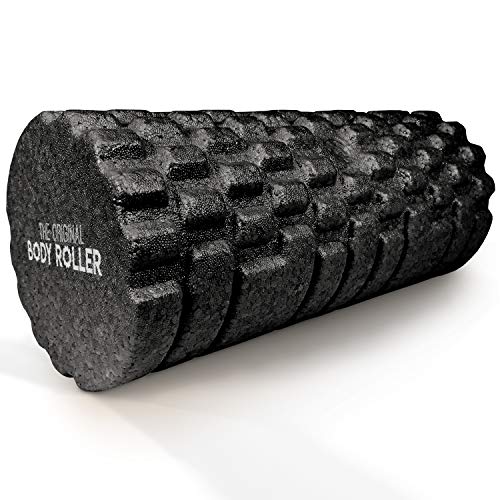
The Original Body Roller has the most aggressive texture of the four options here. One side has ridges, the other has spiked bumps — both are firmer than a standard grid roller. The heavy-duty EPP construction is durable and doesn't compress easily. This is not a beginner roller. The textured surface hits deeper than most people expect, which is the point, but it takes time to build tolerance. For experienced users dealing with chronic tightness or post-workout soreness in specific areas, it's the most effective option on this list.
Pros:
- Triple massage zones replicate different hand pressure types
- Dual grid design — ridges on one side, spiked bumps on the opposite
- Heavy-duty EPP construction holds up under athletic use
- Available in 13" and 17" sizes
- Deep pressure for effective trigger point release
Cons:
- Too aggressive for beginners or anyone with low pain tolerance
- Not a general-use roller — works best for targeted deep-tissue work
- 13" limits full-body coverage
The Original Body Roller High Density Foam Roller for Exercise & Recovery
Check price on Amazon →
👉 View product details
(#ad)Why Foam Rolling Works
Foam rolling, or self-myofascial release, has real evidence behind it:
| Benefit | What It Does | Why It Matters |
|---|---|---|
| Increases Blood Flow | Promotes healing and nutrient delivery | Faster recovery, reduced soreness |
| Reduces Muscle Tightness | Breaks up adhesions and knots | Improved flexibility, less pain |
| Improves Flexibility | Increases range of motion | Better movement, injury prevention |
| Speeds Recovery | Reduces DOMS (delayed onset muscle soreness) | Less downtime between workouts |
| Prevents Injury | Addresses imbalances before they become problems | Long-term health and performance |
Types of Foam Rollers
Different roller types serve different purposes:
| Type | Description | Best For | Trade-offs |
|---|---|---|---|
| Smooth Rollers | Even, uniform surface | Beginners, gentle pressure | Less intense, may not reach deep tissue |
| Textured Rollers | Ridges, bumps, or grid patterns | Deep tissue, experienced users | Can be too intense for beginners |
| Vibrating Rollers | Adds percussion therapy to rolling | Enhanced recovery, pain relief | Higher price, requires charging |
| Contoured Rollers | Shaped for specific body areas | Targeted therapy (back, neck) | Limited versatility |
Foam Rolling Technique Guide
Proper technique matters:
How to Roll Properly
- Go Slow - Roll at about 1 inch per second to allow muscles to respond
- Breathe - Deep breaths help muscles relax and release tension
- Find Tender Spots - Pause on knots or trigger points for 30-60 seconds
- Avoid Joints - Never roll directly on bones or joints, only muscle tissue
- Don't Overdo It - 1-2 minutes per muscle group is sufficient
Best Areas to Foam Roll
| Area | Technique | Why It Helps |
|---|---|---|
| IT Band | Side-lying, roll from hip to knee | Reduces knee pain, improves hip mobility |
| Quads | Face down, roll from hip to knee | Relieves tightness from sitting/squatting |
| Hamstrings | Sit on roller, roll from glute to knee | Improves flexibility, reduces lower back tension |
| Calves | Sit with leg on roller, rotate foot | Relieves tightness, improves ankle mobility |
| Upper Back | Lie on roller, hands behind head | Improves posture, reduces shoulder tension |
| Lats | Side-lying, arm extended overhead | Relieves shoulder and upper back tension |
Note: Start with gentle pressure and build up as your muscles adapt. Sharp pain (not just pressure discomfort) means stop and check in with a professional.
When to Foam Roll
| Time | Duration | Focus | Why It Helps |
|---|---|---|---|
| Before Workout | 1-2 min per area | Tight spots, warm-up | Enhances mobility, prepares muscles |
| After Workout | 2-3 min per area | Worked muscles, recovery | Promotes recovery, reduces soreness |
| Rest Days | 10-15 min total | Full body, maintenance | Prevents tightness, maintains flexibility |
Common Mistakes to Avoid
- Rolling Too Fast - Slow, controlled movements work better than quick passes
- Using Too Much Pressure - Start gentle; too much pressure can bruise rather than release
- Rolling the Lower Back - Avoid direct pressure on the spine; work the surrounding muscles instead
- Skipping Areas - Hit all major muscle groups for balanced recovery
- Not Being Consistent - Short regular sessions work better than occasional long ones
Warning: Never roll over joints, bones, or areas with acute injuries. If you have chronic pain or medical conditions, check with a professional before starting.
Care Tips for Foam Rollers
- Clean regularly - Wipe down with mild soap and water after each use
- Store properly - Keep away from direct sunlight and extreme temperatures
- Check for damage - Inspect for cracks, compression, or wear before use
- Replace when needed - If the roller has lost significant shape or gone soft, replace it
- Use on clean surface - Roll on a mat or towel to protect both roller and floor
- Avoid excessive pressure - Don't apply more body weight than needed
Common Mistakes When Buying Foam Rollers
- Wrong density - Too firm for beginners causes pain; too soft for experienced users gives nothing
- Ignoring texture - Smooth vs textured is a real performance difference, not just aesthetics
- Wrong length - Too short for full-body work; too long to pack for travel
- Ignoring special features - A vibrating roller is a meaningful upgrade if you want added recovery benefit
- Skipping durability - Cheap solid foam compresses after a few months of regular use
- Ignoring portability - Weight and size matter if you train outside the home
Matching Rollers to Your Needs
| Need | Recommended Roller | Why |
|---|---|---|
| Beginners | Amazon Basics or smooth roller | Gentle introduction to foam rolling |
| Deep Tissue | TriggerPoint Grid or Original Body Roller | Intense pressure for chronic tightness |
| Travel | TriggerPoint Grid 13" or compact size | Portable, fits in luggage |
| Enhanced Recovery | TheraGun WaveDuo | Vibration adds percussion therapy |
| Full Body | 24-36" smooth or textured roller | Covers entire body in one session |
| Budget-Conscious | Amazon Basics | Gets the job done |
Detailed Comparison Table
| Feature | TriggerPoint Grid (Best Overall) | Amazon Basics (Best Budget) | TheraGun WaveDuo (Best Vibrating) | Original Body Roller (Best Deep Tissue) |
|---|---|---|---|---|
| Length | 13" | 12-36" options | 27" (contoured) | 12.5" or 17" |
| Texture | Multi-density grid | Smooth | Wave texture | Triple massage zones |
| Density | Firm (EVA foam) | High (polypropylene) | High (EVA foam) | Heavy-duty (EPP foam) |
| Special Features | Hollow core, Distrodensity | None | 5 vibration speeds, Bluetooth | Dual grid design |
| Best For | Most people, travel | Beginners, budget | Enhanced recovery | Deep tissue, athletes |
FAQ
Q: How often should I foam roll?
A: 1-2 minutes per muscle group after workouts, or 10-15 minutes on rest days for full-body maintenance. Consistent short sessions beat occasional long ones.
Q: Should I foam roll before or after workouts?
A: Both. Before: helps with mobility and warm-up. After: promotes recovery by flushing out the muscles and reducing tension.
Q: What's the difference between smooth and textured rollers?
A: Smooth rollers apply even, consistent pressure — fine for most recovery work and better for beginners. Textured rollers apply more concentrated pressure at specific points, which is more effective for deep-tissue work but harder to tolerate until you're used to it.
Q: Can foam rolling cause injury?
A: When done correctly, no. Avoid rolling directly over joints or acute injuries. Sharp pain (distinct from the "good hurt" of trigger point release) means you should stop.
Q: How long do foam rollers last?
A: The TriggerPoint Grid holds up well for 2-3 years with daily use due to its hollow core design. Basic solid foam rollers lose their shape faster — typically 6-12 months of regular use before they go noticeably soft.
Q: Are vibrating foam rollers worth the extra cost?
A: For people who already foam roll consistently and want more, yes. The added vibration does improve blood flow and reduces the time needed for the same benefit. For beginners, a standard roller will do the job — start there.
Final Verdict
The TriggerPoint Grid 1.0 is the right starting point for most people — it holds its shape, travels well, and the multi-density surface is genuinely more effective than a plain smooth roller. Start here.
If budget is the main constraint, the Amazon Basics roller gets the job done for regular use, especially in the 24" or 36" sizes for full-body work.
The TheraGun WaveDuo is worth considering if you have chronic back or neck tension and want the vibration benefit — the contoured design is specifically useful for spinal rolling. It's not a general-purpose upgrade, but for the back, it's the best option on this list.
The Original Body Roller is for experienced users who want deep, uncomfortable pressure. If you've been foam rolling for a while and find the TriggerPoint Grid too gentle, this is the next step.
Pick a roller, use it for 5 minutes a day, and stay consistent. The equipment matters less than the habit.
Building your recovery toolkit? Check out our guides on resistance bands and yoga mats.
Recommended
Best Cold Plunge Tubs 2026: $200 Inflatables to Ice Systems Tested
We tested 5 home cold plunge tubs — budget inflatables to full ice-chiller systems. Which holds temperature, handles daily use, and is worth the cost.

5 Best Infrared Sauna Blankets for Recovery & Detox (2026)
Best infrared sauna blankets 2026: LifePro RejuvaWrap and BON CHARGE tested for far-infrared heat, EMF safety, and recovery results.

5 Best Shiatsu Foot Massagers for Pain Relief & Recovery: 2026 Complete Guide
Best foot massagers 2026 — shiatsu deep-kneading picks tested for everyday relaxation, plantar fasciitis, neuropathy & post-workout recovery.
