5 Best Protein Powders for Muscle Gain (2025): Tested for Taste & Results
Best protein powders for muscle gain in 2025: Rule 1 Whey Isolate vs Optimum Nutrition Gold Standard and Dymatize ISO 100, tested for taste and mixability.

5 Best Protein Powders for Muscle Gain (2025): Tested for Taste & Results
Protein powder is not magic — muscle growth requires training, progressive overload, adequate calories, and enough total daily protein. What a good protein powder does is make hitting your protein targets consistently easier, especially post-workout when whole food meals aren't always practical. We tested each powder for mixability, taste across multiple flavors, digestibility, and actual protein content per dollar, to give you an honest picture of what works at each price point.
Quick Answer
Optimum Nutrition Gold Standard Whey is the benchmark — 24g protein with 5.5g BCAAs, mixes cleanly in a shaker cup, and available in more flavors than any competitor at this price range. Dymatize ISO 100 is the better choice if you have digestive issues with whey concentrate, since the hydrolyzed isolate absorbs faster and is easier on most stomachs.
Table of Contents
- How We Test Protein Powders
- Quick Comparison Table
- Protein Powders vs Whole Foods: What's the Difference?
- What to Look For in Protein Powders
- Product Reviews
- Detailed Comparison Table
- Quick Reference Guide
- How to Use Protein Powder for Muscle Gain
- Common Mistakes When Buying Protein Powders
- FAQ
- Final Verdict
How We Test Protein Powders
We tested each powder over multiple weeks, mixing with water and milk, trying multiple flavors where available, and tracking digestibility over training periods. Our criteria:
- Protein quality and quantity - Content per serving, amino acid profile, and biological value
- Absorption speed and digestibility - How quickly the protein is absorbed, and whether it causes GI discomfort
- Mixability and taste - How easily it mixes, flavor quality across options, texture and aftertaste
- Ingredient quality and purity - Fillers, artificial additives, and third-party testing certifications
- BCAA and amino acid content - BCAA levels, leucine content, and complete amino acid profile
- Value - Protein per serving, cost per gram, and overall practicality
Quick Comparison Table
| Name | Key Feature | Best For | Protein per Serving |
|---|---|---|---|
| Optimum Nutrition Gold Standard | Whey blend with BCAAs | Overall best choice | 24g |
| Dymatize ISO 100 | Hydrolyzed isolate | Fast absorption | 25g |
| Transparent Labs | Grass-fed isolate | Clean ingredients | 28g |
| Rule 1 Whey Isolate | Pure isolate blend | Athletes & lean gains | 24g |
| Nutricost Whey | Concentrate formula | Budget-conscious | 25g |
Protein Powders vs Whole Foods: What's the Difference?
Whole protein sources — chicken, eggs, fish, Greek yogurt — provide protein alongside other nutrients, but they take longer to digest and aren't always convenient immediately after training. Whey protein, particularly hydrolyzed whey, is fast-digesting and delivers a rapid amino acid spike to muscle tissue, which is genuinely useful in the post-workout window. For most people, protein powder is a supplement to whole food sources, not a replacement. If you're already hitting your daily protein target through food, adding powder adds cost without benefit. If you're consistently falling short, a good powder closes the gap efficiently.
What to Look For in Protein Powders
- Protein Content - 20-30 grams per serving is the functional range for muscle protein synthesis
- BCAA Content - Leucine in particular triggers muscle protein synthesis; 2-3g leucine per serving is a reasonable benchmark
- Whey Type - Isolate and hydrolyzed whey absorb faster than concentrate, which matters most post-workout
- Third-Party Testing - Informed Choice, NSF Certified, or equivalent certification matters for competitive athletes and anyone who wants purity verification
- Mixability - Powders that clump or leave gritty texture are genuinely less usable daily
- Taste and Flavor Options - If it tastes bad, you won't use it consistently
- Sugar and Carbs - For lean muscle gain, lower-carb options keep protein the primary macronutrient
Detailed Product Reviews
1. Optimum Nutrition Gold Standard 100% Whey - Best Overall

Optimum Nutrition Gold Standard has been around for decades, and the reason it remains the most-purchased protein powder is straightforward: it mixes easily, tastes good in most flavors, and delivers 24g of protein with 5.5g BCAAs at a reasonable price. The blend of whey isolate, ultrafiltered concentrate, and hydrolyzed peptides is well-formulated. No exotic claims, no unnecessary complexity. The artificial sweeteners are the legitimate complaint from ingredient-conscious buyers, but for the majority of people who just want a reliable, affordable protein that tastes good, this is still the benchmark.
Pros:
- 24g protein per serving with 5.5g naturally occurring BCAAs
- Whey isolate, concentrate, and hydrolyzed blend for fast post-workout absorption
- 20+ flavor options including naturally flavored versions
- Instantized formula — mixes easily with a spoon
- Gluten-free and banned substance tested
- Long track record of consistent quality
Cons:
- Contains artificial sweeteners — not suitable for those avoiding them
- Whey concentrate component means slightly slower absorption than pure isolate
- Can cause digestive discomfort for people with lactose sensitivity
Optimum Nutrition 100 Whey Gold Standard Whey Protein- Chocolate Malt 5.15 lb
Check price on Amazon →
👉 View product details
(#ad)2. Dymatize ISO 100 Hydrolyzed Whey Isolate - Best for Fast Absorption

Dymatize ISO 100 is genuinely one of the cleaner-tasting and fastest-absorbing options available. Hydrolyzed whey is pre-digested into smaller peptides, which means faster uptake than standard isolate — this is where it earns the post-workout premium. 25g protein, 5.5g BCAAs, 4.4g glutamine, low lactose, and low on everything else. The filtering removes most lactose, carbs, and fat, making it a good fit for lactose-sensitive users. Costs more than Gold Standard, which is the trade-off. The 13 flavors available have generally good reviews, though a few miss.
Pros:
- 25g hydrolyzed whey isolate — fastest absorption of any option here
- 5.5g BCAAs and 4.4g glutamine per serving
- Low lactose and gluten-free — easier on sensitive stomachs
- 13 flavor options
- Filtered to remove excess carbs, fat, and sugar
- Made in the USA
Cons:
- Higher cost than concentrate or standard isolate formulas
- Hydrolyzed proteins often have a slightly different taste profile — not everyone's preference
- Some flavor options are stronger than others
Dymatize ISO100 Protein Powder, 100% Whey Isolate, Gourmet Vanilla
Check price on Amazon →
👉 View product details
(#ad)3. Transparent Labs 100% Grass-Fed Whey Protein Isolate - Best Premium
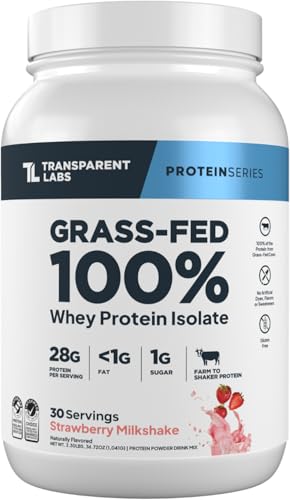
Transparent Labs is the honest choice for people who care about what's in their protein powder. No artificial sweeteners, no dyes, no fillers — just 28g of grass-fed whey isolate per serving, naturally flavored. The grass-fed distinction does matter: higher levels of omega-3 fatty acids and CLA (conjugated linoleic acid) compared to conventional whey. Third-party tested. The 28g protein per serving is the highest of any option here. The cost is also noticeably higher, and the natural flavors tend to be milder than artificially flavored alternatives — which is a preference thing.
Pros:
- 28g protein per serving — highest of any option tested
- 100% grass-fed whey isolate with a better omega-3 and CLA profile than conventional whey
- No artificial sweeteners, dyes, or fillers
- Complete essential amino acid profile
- Third-party tested for purity and quality
- Easy on the stomach
- 20 flavor options including unflavored
Cons:
- Premium pricing — noticeably more expensive per serving
- Natural flavors are milder — some people find them less satisfying than artificial versions
- Less widely available than mainstream brands
Transparent Labs Grass-Fed Whey Protein - 30 Servings, Strawberry Milkshake
Check price on Amazon →
👉 View product details
(#ad)4. Rule 1 Whey Protein Isolate - Best for Athletes

Rule 1 is built specifically for athletes who need banned substance testing — the Informed Choice certification means it's been independently tested for substances that would disqualify a competitive athlete. The formula is 100% whey isolate blended with hydrolyzed whey peptides, no concentrates, no fillers, no gums. 24g protein and 6g BCAAs per serving with virtually no lactose or cholesterol. Clean formula, fast absorption. Made in the USA. The limited flavor range compared to Gold Standard is a genuine limitation for people who get bored with fewer options.
Pros:
- 100% whey isolate and hydrolyzed blend — no concentrates or fillers
- 24g protein and 6g BCAAs per serving
- Virtually lactose-free
- Informed Choice certified — independently tested for banned substances
- Made in the USA with complete quality control
- Low in carbs and fats
Cons:
- Higher cost than concentrate formulas
- Fewer flavor options than larger mainstream brands
- May be more than casual gym-goers need if banned substance testing isn't a priority
Rule 1 Proteins R1 Protein -Strawberry Banana, 25g Fast-Acting, Super-Pure 100% Isolate and Hydrolysate Protein Powder with 6g BCAAs for Muscle Growth and Recovery, 5lbs (RZ0989)
Check price on Amazon →
👉 View product details
(#ad)5. Nutricost Whey Protein Powder - Best Budget
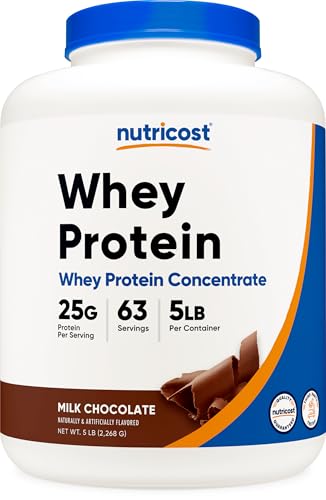
Nutricost delivers 25g protein per serving at a price that meaningfully undercuts every other option here. It's a whey concentrate formula, which means slightly more lactose and slightly slower absorption than isolate — but for people who aren't lactose sensitive and don't have a specific need for ultrafast post-workout absorption, the difference in muscle growth outcomes is minimal. NSF Certified facility, non-GMO, gluten-free. Multiple flavor options including pineapple and s'mores if you want something different. Instantized formula mixes fine. If budget is the constraint, this is where to start.
Pros:
- 25g protein per serving at the lowest cost per gram here
- NSF Certified manufacturing facility
- Non-GMO and gluten-free
- Multiple flavors including unusual options
- Instantized formula — mixes without clumping
- Consistent quality across batches
Cons:
- Whey concentrate (not isolate) — more lactose, slower absorption than isolate
- May cause issues for people with lactose sensitivity
- Flavor quality is good but doesn't match the premium brands
Nutricost Whey Protein Concentrate (Chocolate) 5LBS
Check price on Amazon →
👉 View product details
(#ad)Detailed Comparison Table
| Feature | Optimum Nutrition (Best Overall) | Dymatize ISO 100 (Fast Absorption) | Transparent Labs (Premium) | Rule 1 (Athletes) | Nutricost (Budget) |
|---|---|---|---|---|---|
| Protein per Serving | 24g | 25g | 28g | 24g | 25g |
| Protein Type | Whey blend (isolate, concentrate, hydrolyzed) | Hydrolyzed whey isolate | Grass-fed whey isolate | Whey isolate + hydrolyzed | Whey concentrate |
| BCAAs per Serving | 5.5g | 5.5g | Complete amino profile | 6g | Naturally occurring |
| Absorption Speed | Fast | Ultra-fast | Fast | Fast | Moderate |
| Lactose Content | Low | Low | Low | Very low | Moderate |
| Third-Party Testing | Banned substance tested | No | Yes | Informed Choice | NSF Certified |
| Flavor Options | 20+ | 13 | 20+ | Multiple | Multiple |
| Best For | Overall muscle building | Post-workout recovery | Clean ingredients | Competitive athletes | Budget-conscious |
Quick Reference Guide
| Use Case | Recommended Pick | Why |
|---|---|---|
| Overall best choice | Optimum Nutrition Gold Standard | Proven track record, good taste, reasonable value |
| Fast post-workout absorption | Dymatize ISO 100 | Hydrolyzed for rapid amino acid delivery |
| Clean, premium ingredients | Transparent Labs | Grass-fed, no artificial additives, highest protein |
| Competitive athletes | Rule 1 Whey Isolate | Banned substance tested, pure isolate |
| Budget-conscious | Nutricost | Good protein content at lower cost |
| Lactose sensitive | Dymatize ISO 100 or Rule 1 | Low lactose formulas |
How to Use Protein Powder for Muscle Gain
-
Timing matters - Consuming protein within 30-60 minutes after your workout supports muscle protein synthesis when it's most elevated.
-
Dosage for muscle gain - Research points to 0.40 grams per kilogram of body weight post-workout, and 1.6+ grams per kilogram daily. For an 180-pound person, that's roughly 33g post-workout and 130g total daily.
-
Mix with the right liquid - Water gives faster absorption; milk slows digestion and adds calories. Choose based on your goals and timing.
-
Consistency matters more than timing precision - Using protein powder regularly as part of a training program with progressive overload is what drives results. The window flexibility is wider than early research suggested.
-
Supplement whole foods - Protein powder fills gaps when whole food meals aren't practical. A diet with adequate protein from multiple sources is still the foundation.
Note: Combining post-workout protein with carbohydrates (a banana, dextrose) stimulates an insulin response that can improve amino acid uptake into muscle tissue. Practically useful for serious athletes; optional for most recreational lifters.
Common Mistakes When Buying Protein Powders
-
Prioritizing price over quality to an extreme - Very cheap powders may contain fillers, prop blends, or inflated serving sizes that overstate protein content. Check third-party testing.
-
Ignoring absorption speed for post-workout use - Concentrate is fine for general protein intake; isolate or hydrolyzed is the better call immediately after training.
-
Not checking for third-party testing - Competitive athletes need banned substance testing. Non-athletes benefit from purity verification too — the supplement industry has a history of label inaccuracy.
-
Choosing based only on protein number - A powder with 30g protein per serving that tastes awful is less valuable than 24g you'll actually drink every day.
-
Ignoring flavor variety - If you're going to use this daily for months, buying a flavor you actively dislike will derail consistency.
FAQ
Q: How much protein do I need for muscle gain?
A: Research points to 0.40g per kilogram post-workout and 1.6+ grams per kilogram total daily. For a 180-pound (82kg) person, that's roughly 33g post-workout and 130g total daily. Most protein powders provide 24-28g per serving.
Q: What's the difference between whey isolate, concentrate, and hydrolyzed?
A: Concentrate has more lactose and fat but is cheaper. Isolate is filtered to remove most lactose and fat — faster absorption, better for lactose-sensitive users. Hydrolyzed whey is pre-digested into peptides for the fastest absorption — best for post-workout specifically.
Q: When is the best time to take protein powder for muscle gain?
A: Within 30-60 minutes after training is the most effective window. Pre-bed casein protein can also support overnight muscle protein synthesis. Total daily protein intake matters more than precise timing for most people.
Q: Can I build muscle with just protein powder?
A: No. Protein powder is a supplement to training, not a substitute for it. Muscle growth requires progressive overload, adequate calories, sleep, and consistent protein from multiple sources. The powder makes hitting your targets easier, not automatic.
Q: Are grass-fed or organic protein powders worth the extra cost?
A: Grass-fed whey does have a measurably better fatty acid profile — more omega-3s and CLA. Whether that translates to meaningfully better muscle gain outcomes for most users is debatable. For ingredient-conscious buyers, yes, it's worth paying for. For people primarily focused on protein numbers, standard whey gets the job done.
Q: Is Rule 1's banned substance testing worth paying for if I'm not a competitive athlete?
A: Not specifically for the certification itself — Informed Choice testing mainly matters if you compete under a federation that requires it. What you're also getting is a filler-free, concentrate-free formula, so it's still a reasonable pick for recreational lifters who want a clean isolate blend, just not for that certification alone.
Q: How does Nutricost's whey concentrate compare to isolate options like Dymatize or Rule 1?
A: Nutricost has slightly more lactose and digests a bit slower since it's concentrate rather than isolate, but the protein content per serving is close to identical at 25g. For someone without lactose sensitivity who isn't chasing the fastest possible post-workout absorption, the practical difference in muscle gain is small enough that the lower price wins.
Q: Do I need Transparent Labs' 28g serving instead of the 24g in Gold Standard?
A: Not for the extra 4 grams alone — total daily protein intake matters more than any single serving size. Transparent Labs is worth choosing for the clean ingredient list and grass-fed sourcing, not because 28g meaningfully outperforms 24g for muscle growth.
Final Verdict
For most people building muscle, Optimum Nutrition Gold Standard is still the practical pick — it's been the category standard for decades because it tastes good in most flavors, mixes easily, and delivers consistent results without overcomplicated ingredients. If you're not lactose sensitive and don't need banned substance testing, it's the most cost-effective starting point.
Dymatize ISO 100 is the upgrade specifically for post-workout use — the hydrolyzed formula means faster amino acid delivery during the window that matters most. Worth the extra cost if speed of absorption is a priority.
Transparent Labs is the right call if clean ingredients matter to you more than price — 28g of grass-fed protein with no artificial additives and third-party testing. You're paying for the sourcing and the certification, and it's a reasonable trade for people who care about what they're putting in their body.
Nutricost works if budget is the main constraint. The protein quality is honest, the facility is certified, and the lower cost lets you stay consistent without the expense of premium options.
Protein powder only works if you actually use it. Pick one you'll drink daily and pair it with consistent training and adequate total calories.
Building your fitness routine? Check out our guides on pre-workout supplements, creatine for muscle gain, and post-workout recovery.
Recommended
Best Cold Plunge Tubs 2026: $200 Inflatables to Ice Systems Tested
We tested 5 home cold plunge tubs — budget inflatables to full ice-chiller systems. Which holds temperature, handles daily use, and is worth the cost.

5 Best Infrared Sauna Blankets for Recovery & Detox (2026)
Best infrared sauna blankets 2026: LifePro RejuvaWrap and BON CHARGE tested for far-infrared heat, EMF safety, and recovery results.

5 Best Shiatsu Foot Massagers for Pain Relief & Recovery: 2026 Complete Guide
Best foot massagers 2026 — shiatsu deep-kneading picks tested for everyday relaxation, plantar fasciitis, neuropathy & post-workout recovery.
